

Fibre laser repair
CNC Repair handles fibre laser repair for sheet cutters, tube systems and marking units in shops across South Africa. We trace faults through the source, chiller, cutting head, gas path, control chain and motion system, then leave a written service report on site.
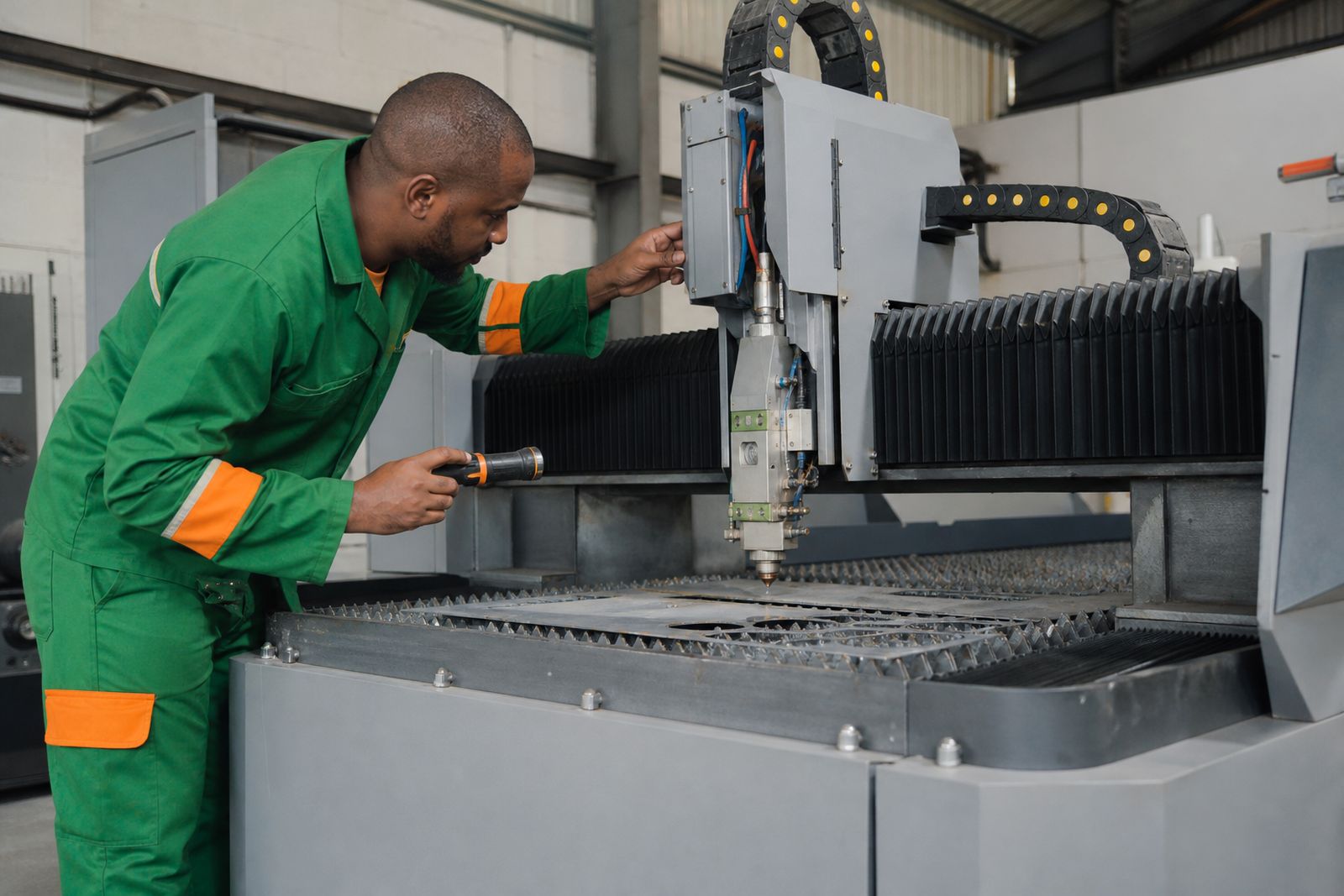
Faults we see on fibre cutters and markers
Fibre laser problems rarely stay in one place. A source alarm can start with poor cooling, a height control fault can begin with a damaged cable track, and rough cut edges can point to optics contamination, gas pressure variation or unstable axis movement. Our field technicians work through the machine as a whole and diagnose the actual fault path before parts are changed.
- Laser source faults, interlocks, start-up failures and power instability
- Chiller alarms, low flow, temperature drift and coolant contamination
- Cutting head crashes, nozzle strikes, lens contamination and focus issues
- Capacitive height sensing faults and inconsistent Z-axis response
- Servo alarms, drive trips, encoder faults and axis following errors
- Control faults, I/O issues, limit trips and emergency stop chain problems
- Piercing inconsistency, dross build-up, poor edge quality and cut loss mid-programme
- Marker faults including weak marking, broken hatch lines and galvo positioning errors
We repair and maintain machines of many makes and we do not sell new machines. That independence matters when a shop floor needs a clear diagnosis rather than a sales visit.
What is included on a fibre laser repair visit
A repair call-out starts with fault-finding at the machine, then moves into testing, adjustment, replacement of failed service parts where available, and functional checks under production conditions. If a fault is outside safe repair limits on site, we document exactly what stopped the job and what parts or follow-up work are needed.
- Initial machine assessment and safe isolation checks
- Alarm history review and control parameter inspection where accessible
- Inspection of source, chiller, head, gas train and extraction interfaces
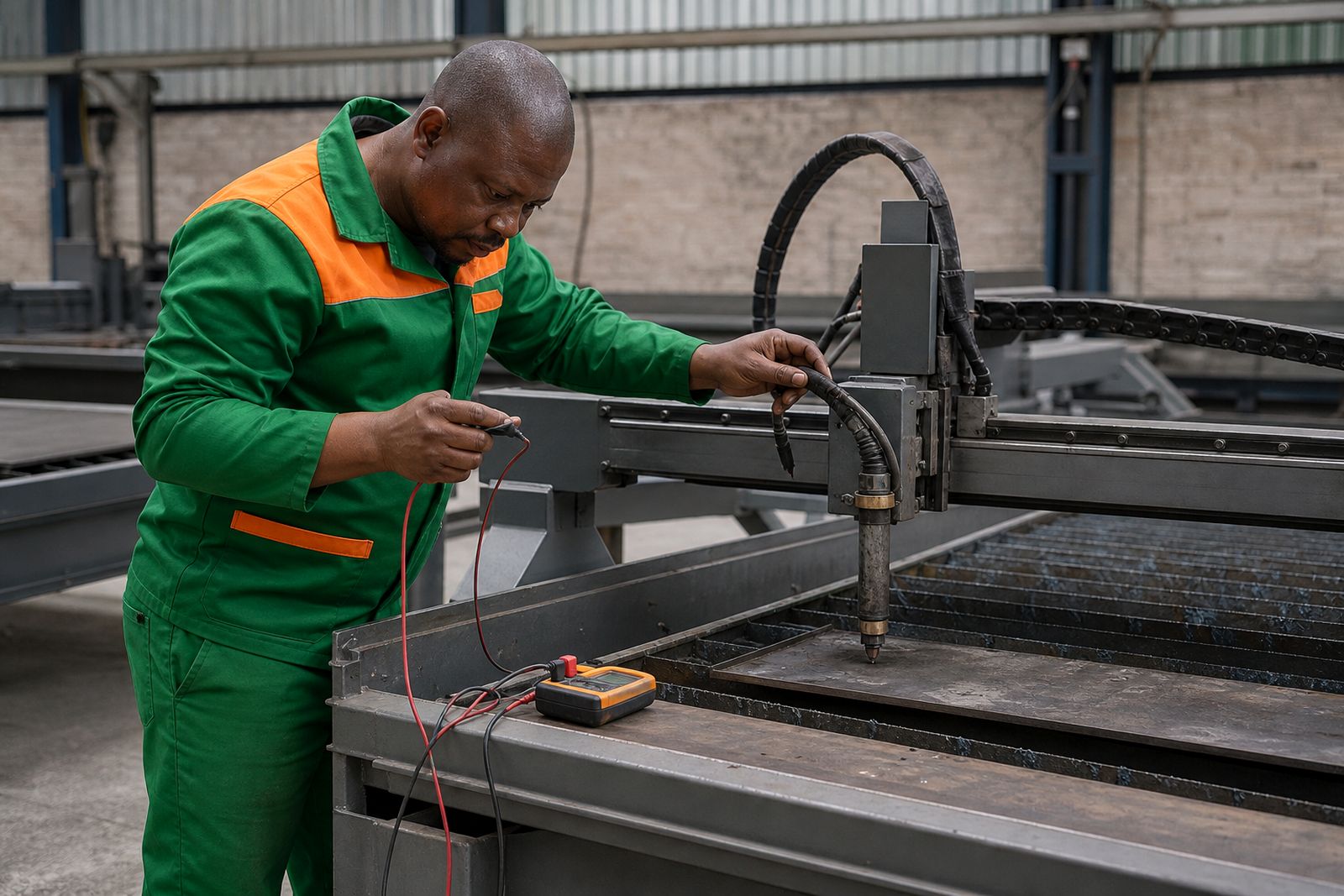
- Electrical testing on control, drives, sensors, wiring and safety circuits
- Mechanical checks on rails, rack, couplings, belts, bearings and backlash points
- Cleaning of serviceable optics areas and nozzle related components where appropriate
- Replacement of agreed spare parts and consumable service items
- Cutting or marking test samples after repair
- Written service report with findings, work done and next actions
For production shops this report helps maintenance staff track recurring stops and plan the next service window, which is useful where more than one laser shares the same operators.
How the job runs on site
Once the machine location and symptoms are logged through our contact form, we arrange the visit around the type of laser, the fault behaviour and the province. On arrival the technician confirms the machine state with the operator or maintenance contact, checks whether the fault is constant or intermittent, and inspects any recent collisions, power events or gas supply changes.
From there we test in stages. Electrical and control checks come first, followed by source and cooling checks, then head, height control and motion verification. If the machine can run safely we move to dry cycle tests and then material tests using the client’s normal stock. That gives a truer picture than a no-load reset because some faults only appear under heat and motion. When the repair is complete we note settings touched during the visit and list any further risks still present.
If a part must be sourced, we record the machine details, failed item specification and any option code visible on the assembly. That cuts down wrong-part delays and avoids guesswork later.
What to prepare before the technician arrives
A little preparation saves lost time on site. Fibre laser faults often overlap with utilities, material condition and operator set-up, so the machine area needs to be ready for safe testing.
- Machine model details and any control or source serial information available
- A short note on the fault, including when it started and whether it is intermittent
- Alarm photos from the control, source screen, chiller panel or marker software
- Sample material normally used, in the usual thickness range
- Assist gas available and confirmed at normal working pressure
- Access to the chiller, electrical cabinet and rear cable areas
- One person who knows the recent machine history
- Any old service notes or parts lists kept on site
For cutters running in coastal air, especially near Durban, Gqeberha or Cape Town, mention any rusting around sensor connectors or cabinet cooling issues. Humidity and dust can push a marginal component over the edge, and that clue matters.
How pricing is worked out
Pricing depends on travel, machine type, fault depth and parts needed. A compact marker with a galvo fault is not costed the same way as a full-bed sheet cutter with source alarms, chiller instability and a head crash. We keep the pricing structure practical: field labour, travel where applicable, diagnostic time, replacement parts, and any follow-up calibration or test cutting required to return the machine to stable operation.
Service parts are charged separately from labour. Where a fault requires major assemblies, we identify the item and quote on that basis rather than folding it into vague hourly wording. Contract clients may structure routine maintenance and planned inspections differently from one-off call-outs, but the repair notes remain detailed either way.
Retrofit work, control upgrades and repeated nuisance faults sit under a separate scope once the job extends beyond a straight repair. That protects the client from blurred costs and it keeps the machine history easier to read later.
Aftercare, service intervals and practical specs
After a repair we advise on the next maintenance point based on actual machine condition and service history. Some shops need another visit after a head crash or coolant contamination event, while others simply need a normal preventive interval restored. If cut quality is sensitive to nozzle condition, lens cleanliness or axis play, that is written into the report so operators and maintenance staff know what to watch on the next shift.
Typical service checks on fibre equipment include beam delivery condition, chiller temperature stability, focus response, gas line integrity, drive health and repeatability across a sample nest. On markers we also check field consistency, hatch quality and the reliability of start signals from the control side. A laser that starts cleanly on Monday but drifts by Thursday usually has a reason, and we would rather pin that down than leave the shop with a temporary reset.
Use our contact form when a fibre cutter or marker starts dropping cuts, losing height control or showing source and chiller alarms that the operator cannot clear safely.
What our CNC Repair customers say
Verified Google reviews
Questions we get asked
Do you work on both fibre cutters and fibre markers?
We service larger cutting systems as well as compact marking units, with fault-finding on source, cooling, control and motion related issues.
Can you help if the machine cuts badly but still runs?
Poor edge finish, lost cuts, unstable piercing and inconsistent marking are common service calls, and they often point to faults that are not obvious from alarms alone.
Do you sell new fibre laser machines?
CNC Repair is an independent repair and maintenance crew. We work on machines already in service and support them with call-outs, contracts and retrofit work.
Also worth a look
Tell us about the job
Send sizes, materials and where you are through our contact form, and we will come back with the practical options.
Open the contact form