Plasma cutter repair
CNC Repair handles plasma table faults in the field across South Africa, from unstable arc starts to drifting motion and failed height control. We work on many makes of CNC plasma equipment and focus on repair, maintenance and retrofit work on existing machines.
What we repair on CNC plasma tables
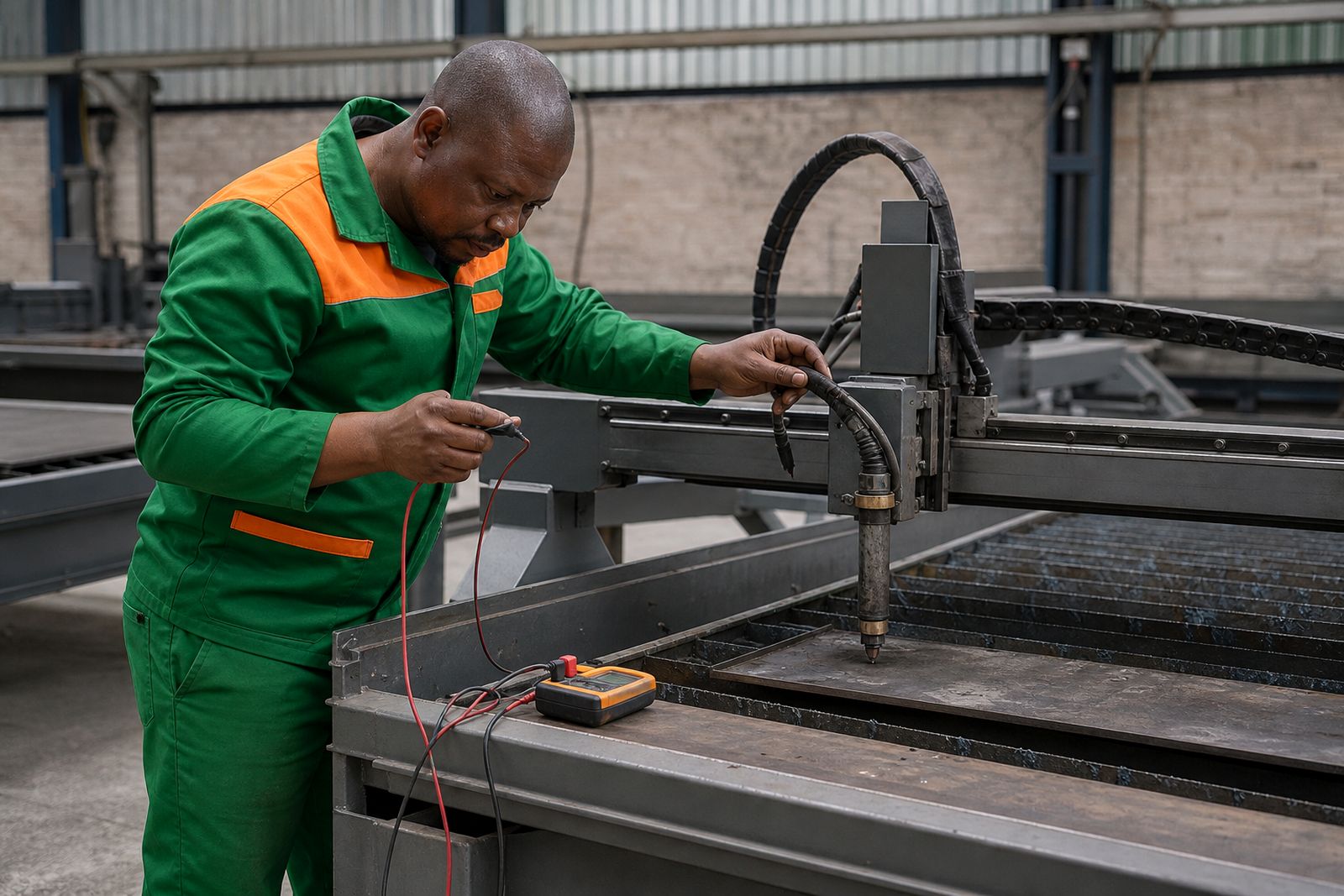
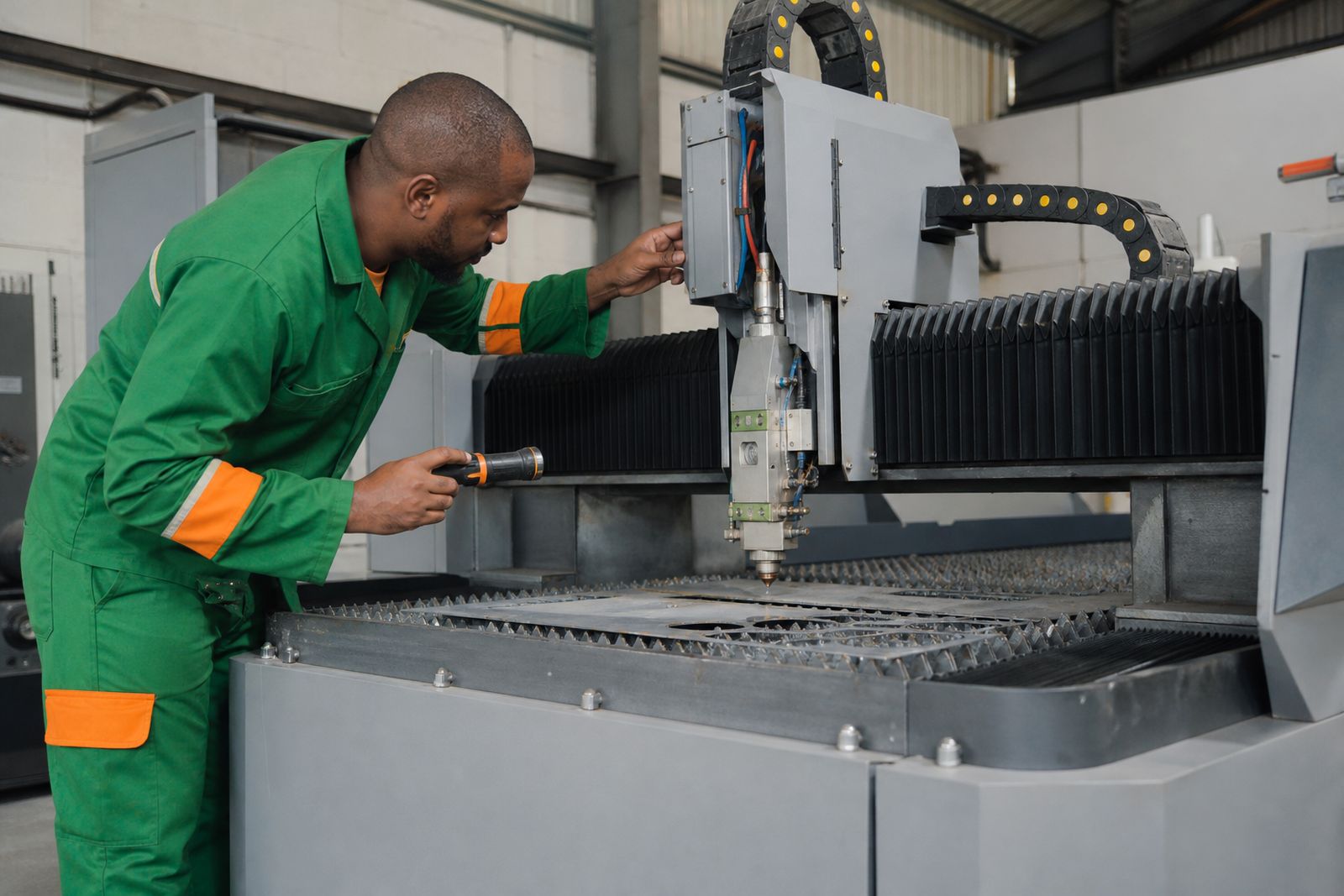
Plasma cutting faults rarely sit in one place. A poor cut edge can start at the torch, come from worn consumables, trace back to a bad earth path, or be caused by a motion issue that leaves the gantry slightly out of square. On site, our technician checks the full chain so the machine is treated as a complete system.
Most call-outs involve height control errors, torch crashes, failed arc transfer, inconsistent pierce height, axis alarms, cable damage, stuck limit switches, poor cut quality, nesting jobs that stop mid-run, or communication faults between the controller and the table. We also attend to older tables where parts have been patched in over time and the wiring is no longer easy to follow.
- Torch height control faults, including floating head switch and sensor issues
- Power source alarms, unstable arc starts and loss of arc during cutting
- X, Y and Z axis travel problems, gantry racking and home position errors
- Torch lead, earth clamp, cable chain and connector damage
- Controller, drive, motor and I/O faults affecting motion or cut sequence
- Air supply related faults where pressure, moisture or flow affect cut performance
What is included in a repair visit
A standard repair visit starts with fault-finding on the machine in its working environment. That matters on plasma equipment because consumable wear, air quality, table condition and electrical noise can all affect the result. We test the symptoms the operator sees, inspect the mechanical condition, trace obvious electrical faults and check the cut process where safe to do so.
Where parts are needed, we identify them and fit replacements if available on site or if the correct items have been arranged in advance. If the machine has multiple faults, we separate the primary failure from secondary damage so the client can see what must be dealt with first. After the visit, the job includes a written service report with findings, work carried out and further recommendations if there are follow-up items.
- On-site fault diagnosis and inspection of the table, gantry and torch system
- Electrical and control checks on drives, signals, switches and interlocks
- Mechanical checks on rails, bearings, racks, belts, lead screws and alignment
- Replacement of service parts and damaged components where agreed
- Basic cut testing after repair to confirm operation under load
- Service report for maintenance records and planning
How the job runs from logging to cut test
The first step is logging the fault through our contact form with the machine type, controller details, province, and a short note on what the machine is doing or not doing. Photos of the torch area, control screen, damaged cables or sample cut quality help, especially where the failure is intermittent. If there is a service history on site, include the last major repair and any recent parts changes.
Once the visit is scheduled, the field technician arrives with test gear and common service items suited to plasma table work. On site, the process normally follows the same sequence: confirm the fault, isolate the section at fault, repair or replace parts where practical, run dry movement tests, then complete controlled cutting tests. If a failed part has caused other issues, those are noted so the machine does not go back into production with an avoidable weak point still there.
Where a machine is older or has had non-standard modifications, the visit may also include tracing undocumented wiring and checking that safety circuits still operate as intended. That part can take longer than expected on some tables but it saves guesswork later.
What your team should prepare before we arrive
Good access shortens stoppage time and makes a proper diagnosis easier. The machine should be available for inspection, with an operator or maintenance contact on hand to explain the fault pattern. If the issue only appears on certain material thicknesses, keep a sample sheet and a recent job file ready. It helps us see whether the trouble follows the process settings or the machine itself.
Please make sure the table area is reasonably clear. The air system should be available for testing, and the control cabinet should be opened safely. Where site rules apply, tell us about induction, permit or PPE requirements before the visit. If your workshop is near the coast, moisture in the air line can be a bigger factor than teams expect and it's worth checking drains and filtration before blaming the torch.
- Machine model, controller details and a short fault description
- Photos or video of alarms, misfires, torch crashes or cut defects
- Access to electrical supply, air supply and the machine control cabinet
- Sample material and consumables for a supervised test cut
- Any drawings, wiring changes or previous service notes kept on site
How pricing is worked out
Repair pricing depends on travel, time on site, fault complexity and parts used. A straightforward switch or cable fault on a table in Midrand is priced differently from a multi-day breakdown in another province where the machine has motion faults, torch height issues and power source errors all at once. For that reason, the cost is usually made up of a call-out component, labour, and any replacement parts or retrofit items approved during the job.
For clients with several machines or regular production pressure, service contracts can make planned maintenance and budgeting easier. Contract work is useful on plasma tables that run daily because it reduces the pattern where consumables, rails and sensor issues are only looked at once cut quality has already dropped. We can also scope a retrofit for machines due for a deeper upgrade, including replacement of ageing controls, drives or height control hardware. This helps to stop repeated failures from draining more time and cost.
Aftercare, service notes and longer-term maintenance
Once the immediate fault has been cleared, the service report records what was found, what was repaired and what should be watched next. That gives maintenance teams a clean record for spares planning, especially on mixed workshops with plasma, routers and machine tools on the same floor. If a table is showing wear across rails, drive components and cabling, we note that honestly so the next stoppage is not treated as a surprise.
Ongoing care on plasma equipment usually centres on clean dry air, sound earthing, torch consumable condition, cable support, rail cleanliness and accurate height sensing. Small issues in these areas tend to show up first as cut quality drift, but if left alone they can become crashes, motor overloads or repeated arc faults. Where needed, we can return for planned maintenance, calibration checks and retrofit work to steady an older machine before another breakdown.
What our CNC Repair customers say
Verified Google reviews
Questions we get asked
Do you repair plasma cutters from different makes?
We work independently on many makes of CNC plasma equipment and focus on diagnosing the machine in front of us, its controls, drives, torch system and table mechanics.
Do you sell new plasma cutting machines?
CNC Repair is a repair and maintenance crew. Our work covers call-outs, planned servicing, fault-finding, spare parts and retrofit projects on existing machines.
Can you help if the table still moves but cut quality is poor?
Poor cut quality often points to a wider machine fault beyond consumables alone. We check height control, motion accuracy, air quality, electrical condition and the power source before drawing conclusions.
Also worth a look
Tell us about the job
Send sizes, materials and where you are through our contact form, and we will come back with the practical options.
Open the contact form