About CNC Repair
CNC Repair is an independent Midrand team focused on keeping production machines running across South Africa. We handle repair, maintenance and retrofit work on many makes, with field technicians covering every province.
Work centred on repair, maintenance and retrofits
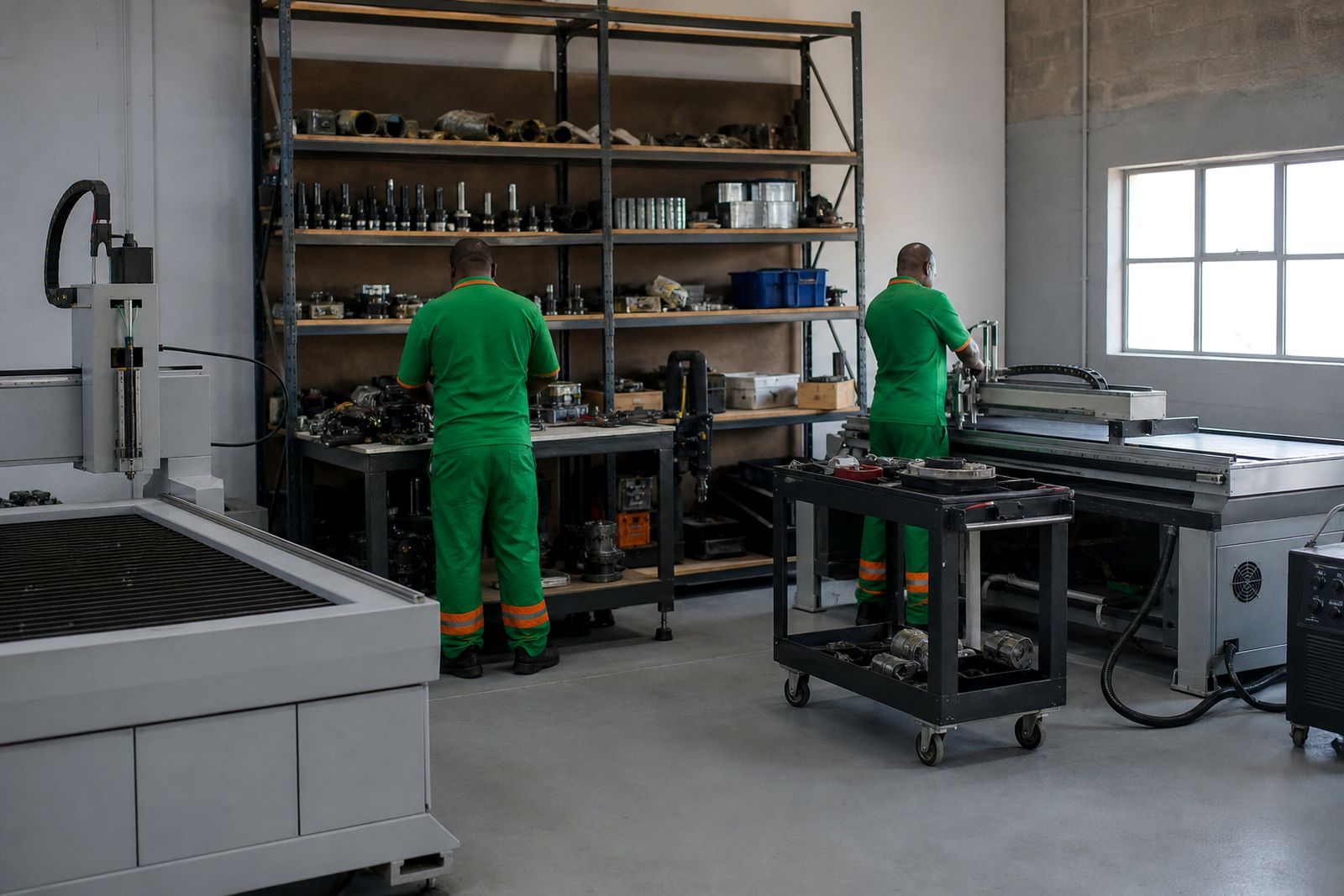
Our job is to restore, maintain and improve working machines in real production spaces. Our work covers machines already on your floor, tracing faults, replacing failed parts where needed, carrying out service work and recording what was done on each visit. We do not sell new equipment.
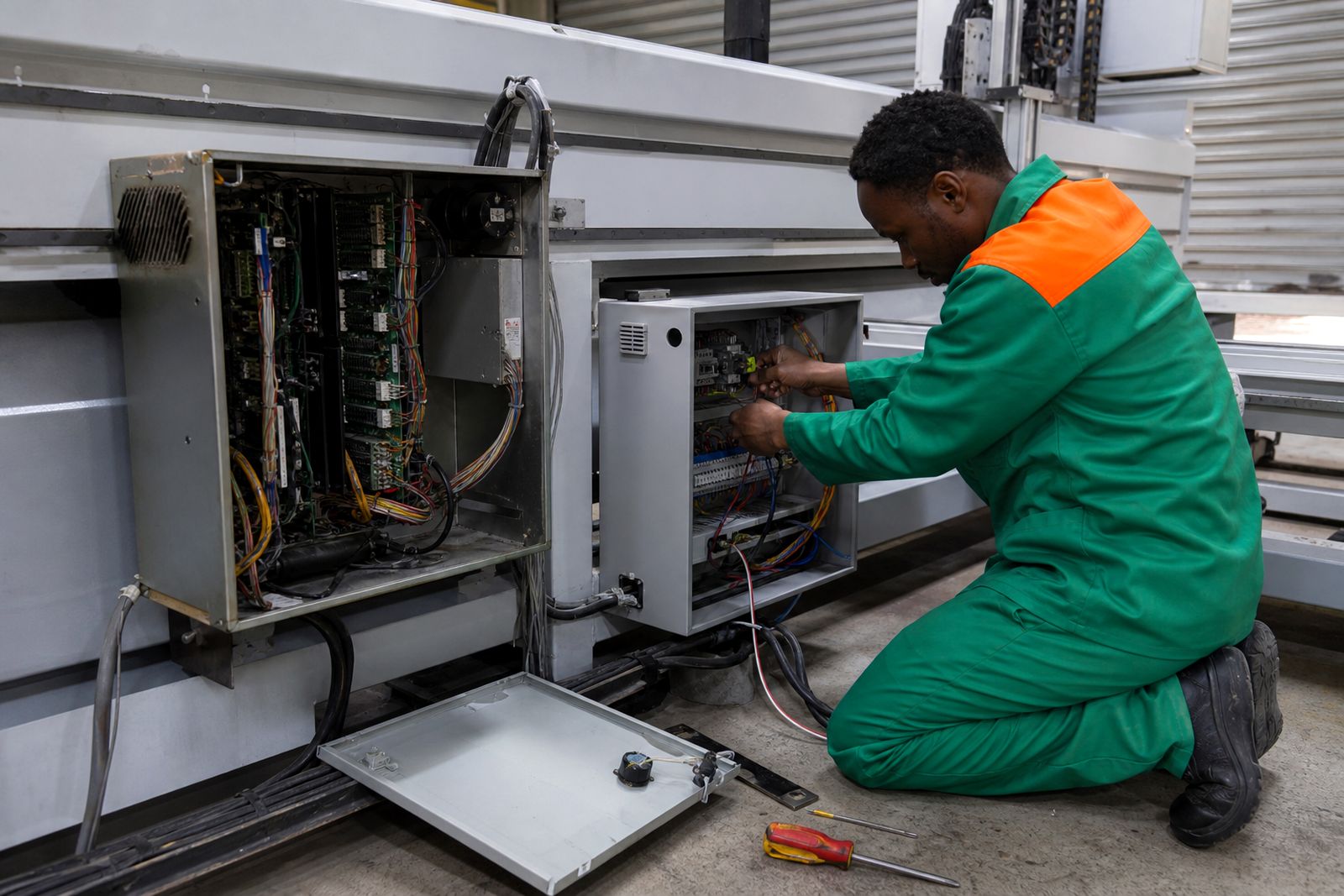
The team covers a wide spread of equipment found in sign shops, fabrication plants, joinery lines, engineering rooms and print departments. Some calls are urgent stoppages, others are planned maintenance visits or retrofit jobs where ageing controls, drives, wiring or operator interfaces need attention. Every site has its own rhythm, and the work has to fit around output targets not sales talk.
- CNC routers used for board cutting, nesting and panel work
- CO2 and fibre laser systems for cutting and engraving
- Plasma cutting tables in fabrication environments
- Milling machines and other CNC machine tools
- Plotters, cutting tables, wide-format printers and vinyl cutters
Because we are independent, the brief is practical. Find the fault, assess wear, fit suitable parts, test properly and leave a useful report behind. That keeps the conversation on machine condition and production risk rather than brand loyalty.
The kind of clients we work with
Most clients call when downtime starts costing them material, labour hours or delivery dates. We work with workshops that run one machine and plants that run several, often with mixed ages and mixed control systems under the same roof. Some sites need a single call-out after a crash or electrical fault. Others need regular attendance to keep output predictable over busy months.
Our Midrand base puts Gauteng within easy reach, while field technicians travel into KwaZulu-Natal, the Western Cape, the Eastern Cape, the Free State and the rest of the country. Coastal humidity, dusty cutting rooms, unstable mains supply and heavy shift patterns all show up in the service notes, so the approach is never copy-and-paste.
- Cabinetmakers and furniture workshops with CNC routing lines
- Signage and display companies running print, cut and finishing equipment
- Metal fabrication shops using plasma, laser and milling equipment
- Industrial plants with older CNC machine tools needing steady upkeep
- Print rooms and graphics departments with finishing equipment on daily duty
How the team is set up
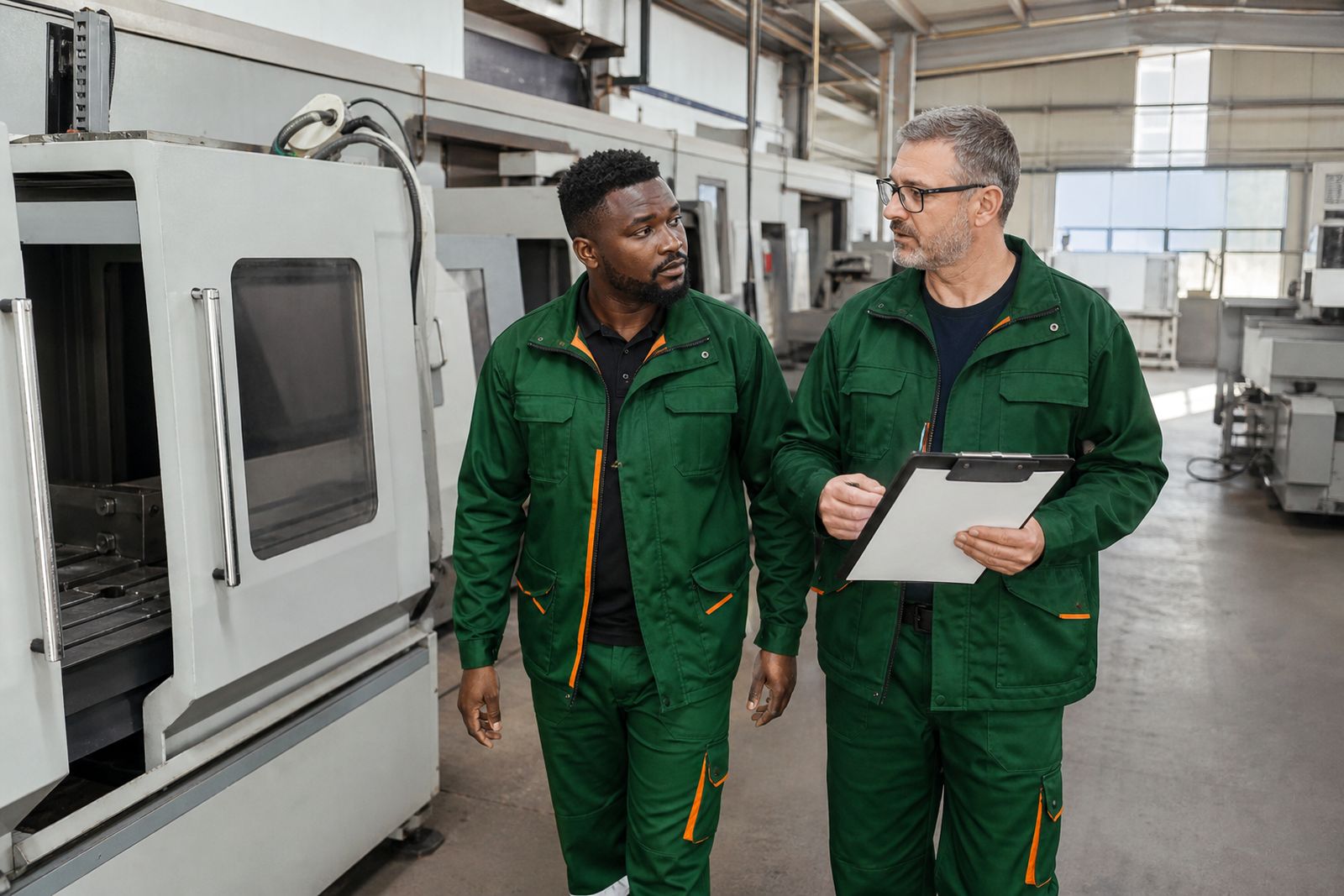
The work is shared between service coordinators, field technicians and technical support staff at our Midrand office. Service coordinators take in the machine details, operating symptoms, site location and access notes. Field technicians carry out testing and repair work on site, and technical support staff help with fault history, parts matching and retrofit planning for machines that need work beyond a once-off fix.
For larger jobs, the team will split the work into stages so production managers can see the difference between immediate repair, short-term service items and longer retrofit decisions. That matters on machines with layered faults, where a tripped drive may be the visible problem but worn motion components, damaged cables or contaminated optics are also part of the picture.
We keep the communication practical and tied to the machine itself. Clients usually need to know what failed, what was tested, what was changed and what still needs attention. That is the level we work at, without trying to turn a service visit into a sales exercise.
Our Midrand office and the field pattern
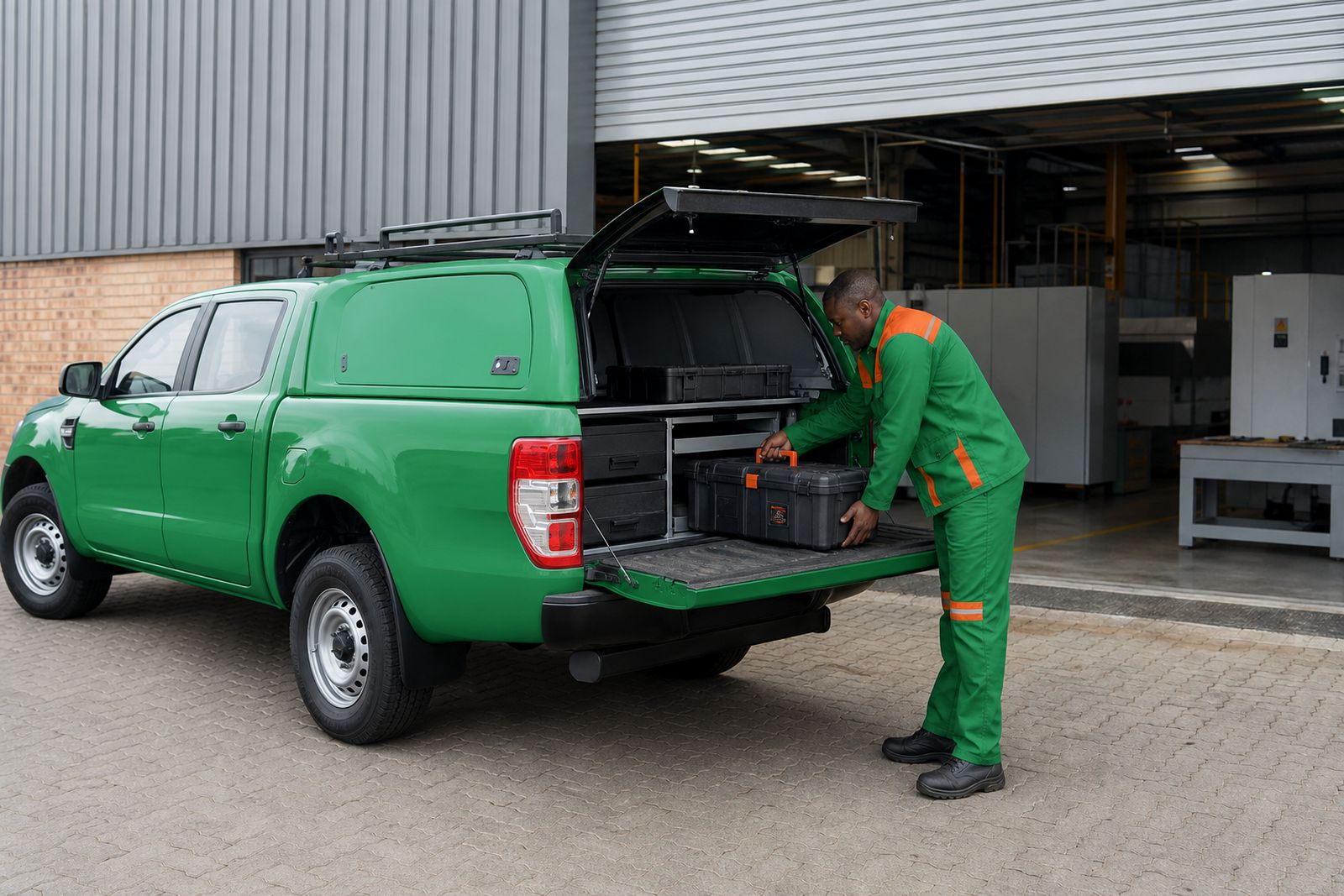
CNC Repair operates from Midrand with an office base that supports national field work. Machines stay at client sites for most repair and maintenance jobs because access to the installation, utilities, guarding, extraction and operator feedback is often necessary to diagnose properly. The office coordinates bookings, service records and parts handling, while technicians travel to the plant, shop or factory where the machine is installed.
That setup suits South African service conditions. A router in an inland board shop behaves differently from a laser near the coast, and a print finishing line in a high-dust room calls for different checks to a milling machine in an engineering bay. Getting eyes on the machine where it works tends to save time and reduces guesswork.
When a part must be sourced or a retrofit scope must be planned, the office keeps the paperwork and service history in order so the next visit starts with a clear record, not a half-memory from the last stoppage.
From first enquiry to site report
Most jobs start with a fault description sent through our contact form. From there, the team checks the machine type, location, symptoms, urgency and any previous repair history you can share. Photos of alarms, damaged components or poor cut quality often help, especially when the machine is in another province.
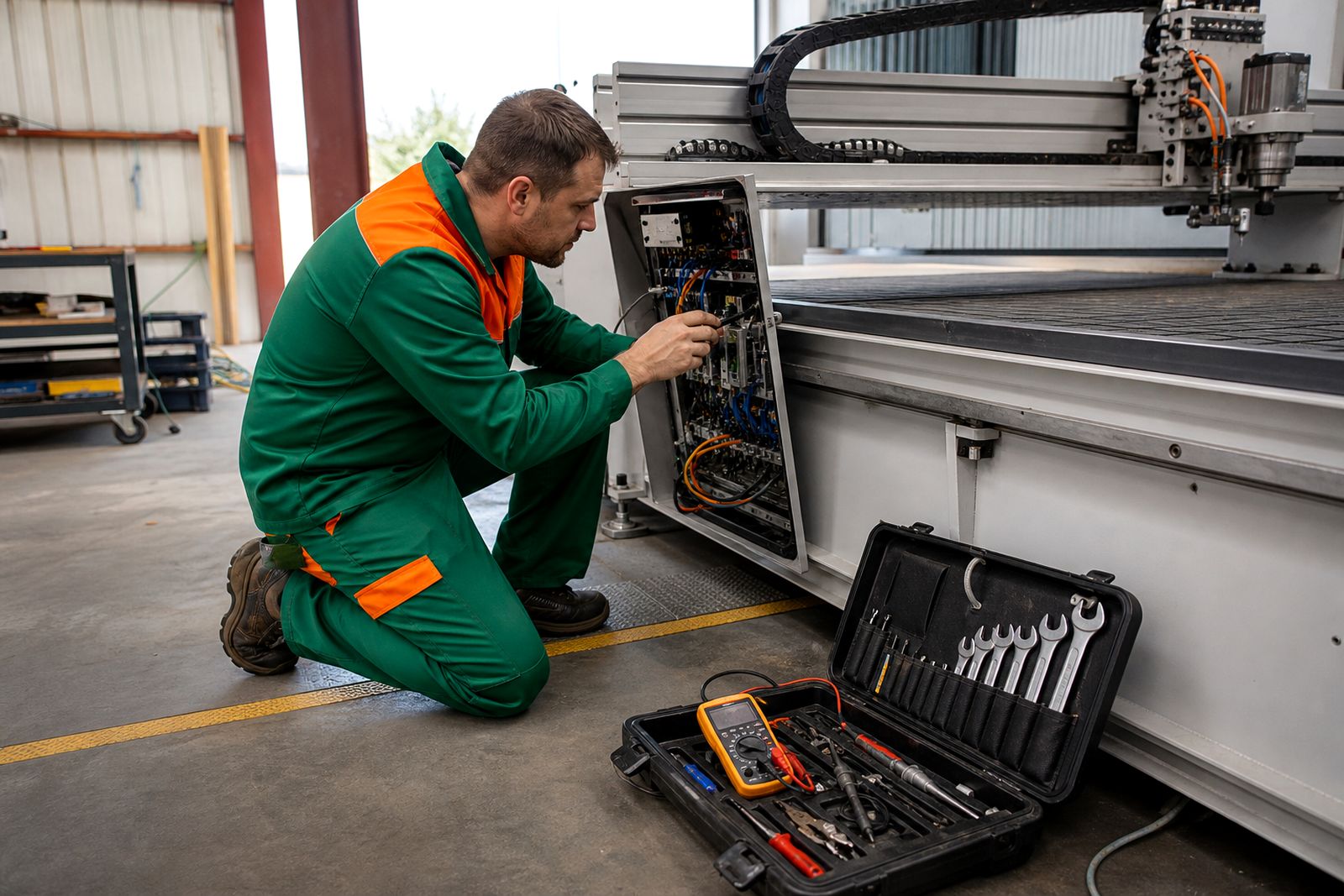
Once the visit is booked, the technician arrives with the job brief and carries out fault-finding on site. Electrical checks, motion tests, alignment checks, software and control review, consumable condition and safety observations are handled as the machine requires. If a part has failed, the technician identifies the item and records it against the machine so there is a trail for later service work.
- Fault review and job intake before travel
- On-site diagnosis and testing
- Repair work, servicing or temporary stabilising action where suitable
- Parts identification and follow-up requirements
- Service report issued for the machine record
After the visit, aftercare is tied to the actual findings. Some clients need a return booking for parts fitment, some need a maintenance plan, and some need advice on whether retrofit work makes better financial sense than repeated patch repairs. The point is to leave the machine owner with a clear technical picture, not vague reassurances.
What independence means on a real job
Being independent matters when a workshop runs mixed equipment and cannot afford to chase three different service channels for three different machines. We repair and maintain machines of many makes, and the service decision is based on condition, parts availability and what the machine must do on your floor.
That also means we are direct about limits. If a machine has reached the stage where recurring breakdowns, outdated controls or poor parts support are driving cost up, we will say so. In many cases a retrofit or controls upgrade gives the site a better route than repeated emergency visits, but sometimes a careful service cycle and a few targeted component changes are enough. The right service plan follows the machine, the workload and the environment.
If you need to log a repair, arrange maintenance cover or discuss retrofit work, send the machine details through our contact form and the Midrand team will route the job to the right service channel.
Questions we get asked
Do you sell new CNC machines?
CNC Repair is focused on repair, maintenance, call-outs and retrofit work on machines already in use.
Do you only work in Gauteng?
The base is in Midrand, with field technicians covering Gauteng, KwaZulu-Natal, the Western Cape, the Eastern Cape, the Free State and all other provinces.
Can you work on different makes in one factory?
We are independent and work on many makes across routers, lasers, plasma cutters, milling machines, plotters, wide-format printers and vinyl cutters.
Also worth a look
Tell us about the job
Send sizes, materials and where you are through our contact form, and we will come back with the practical options.
Open the contact form