

Service contracts
A service contract keeps planned maintenance on the calendar instead of leaving every stop to a breakdown. CNC Repair handles scheduled visits, fault-finding, service reports and call-outs for CNC equipment across South Africa.
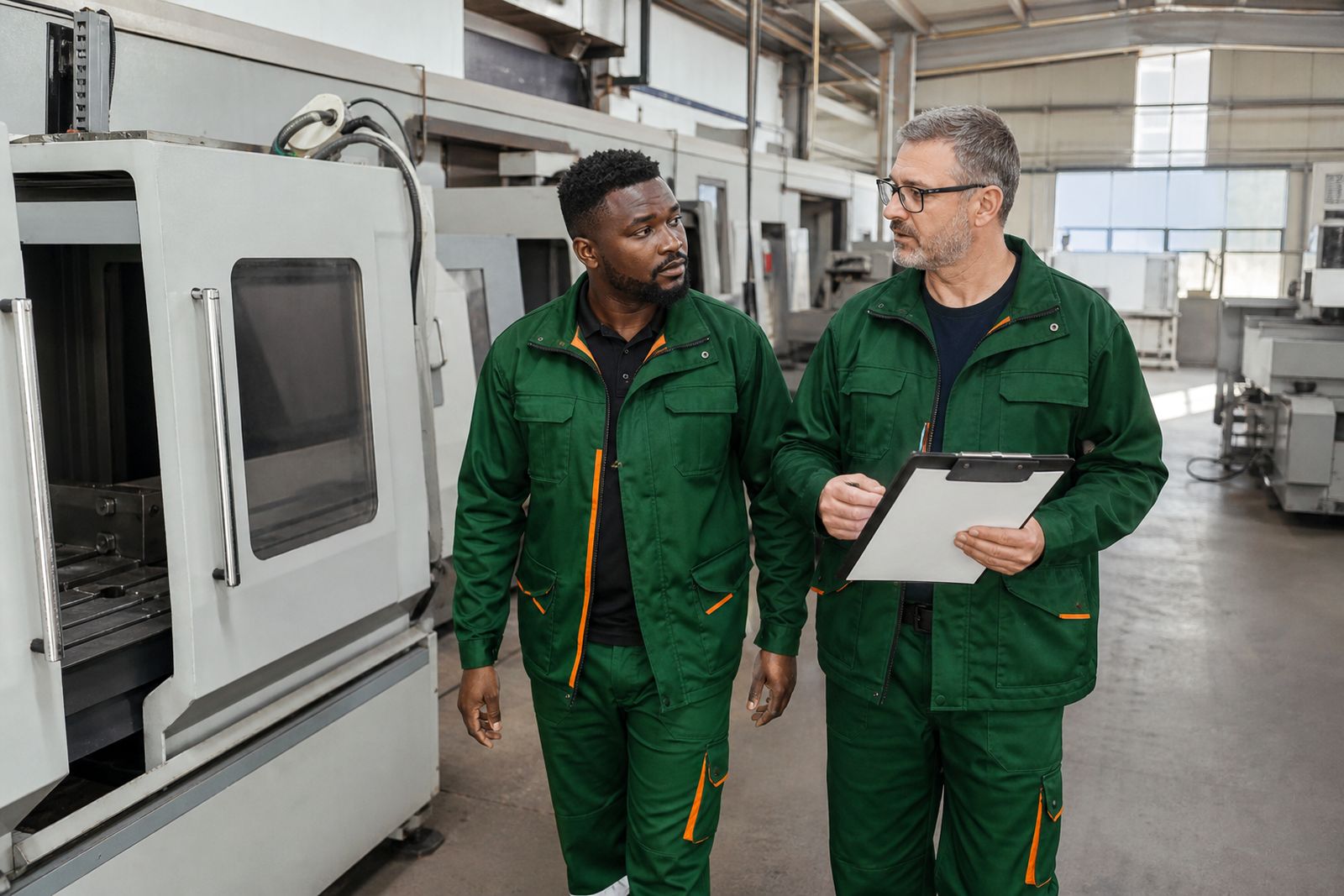
Planned cover built around your machine mix
Service contracts are arranged for working shops that need regular attention on production equipment and consistent maintenance support. We cover CNC routers, CO2 and fibre lasers, plasma cutters, milling machines, plotters, wide-format printers and vinyl cutters, with schedules matched to how heavily each machine is used.
A contract can cover one machine at a single branch or a mixed fleet across several provinces. Some clients need monthly visits on high-duty equipment, while others run on a two-month, quarterly or half-year cycle. The point is to catch wear, drift, contamination and minor electrical faults before they stop output for a full shift.
- Scheduled preventive maintenance visits
- Priority booking for breakdown call-outs
- Fault-finding on electrical, control and motion issues
- Mechanical checks, adjustment and service work
- Service reports after each visit
- Parts planning for items with repeat replacement patterns
What is included during contract visits
Each planned visit starts with a machine condition review and a discussion with the operator or maintenance lead about recent faults, alarms, cut quality, print quality or axis behaviour. From there the technician works through the machine systematically. The exact tasks depend on machine type, but the visit is always practical and recorded properly.
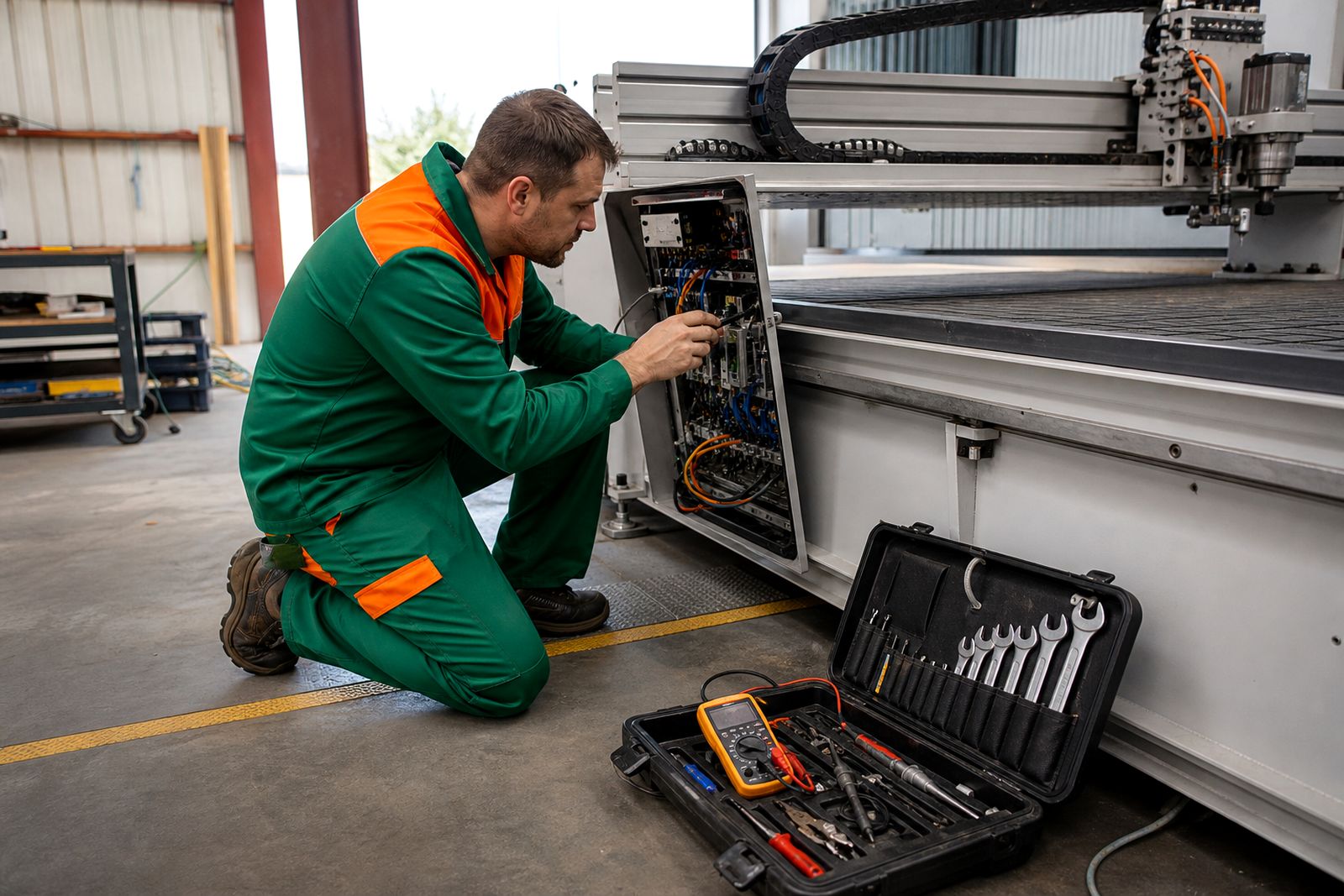
On routers and machine tools this may include spindle checks, lubrication points, linear motion inspection, drive condition, home and limit sensing, cable movement, control cabinet cleaning and test cuts. On laser and plasma equipment, the visit may cover beam path or cutting head checks, extraction-related observations, gas line condition, chiller or cooling review where fitted and cut consistency checks. On print and plotting equipment, attention often goes to carriage travel, feed systems, sensor readings, belts, cleaning stations and media tracking.
- Visual and functional inspection of the machine
- Cleaning of accessible service areas
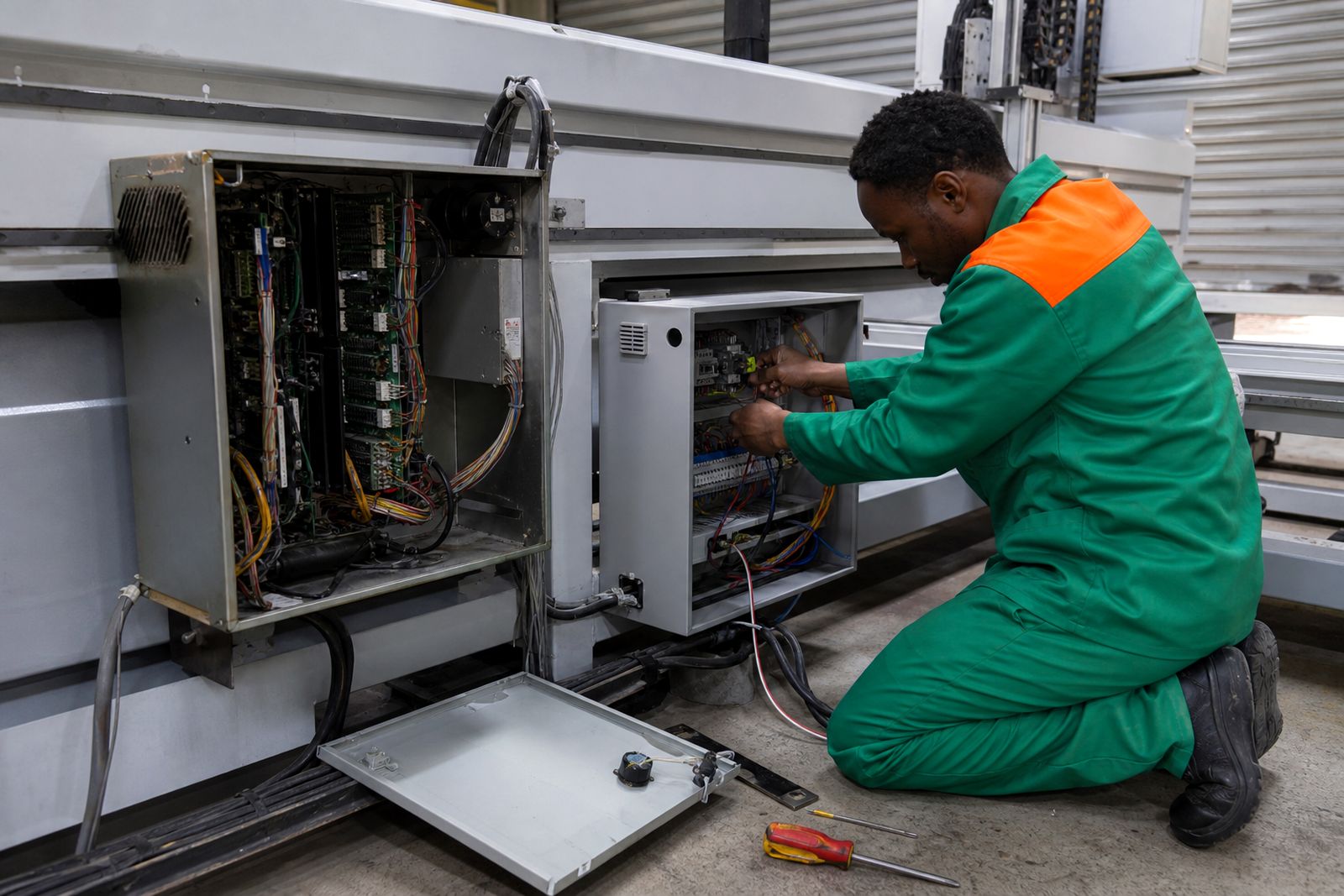
- Checking wiring, connectors, fans and cabinet condition
- Inspection of drives, motors, bearings, rails and belts where applicable
- Testing of safety circuits and interlocks where fitted
- Calibration or adjustment within normal service scope
- Written notes on faults found and parts recommended
How the contract runs from start to visit day
We start with a list of the machines to be covered, where they are installed and what problems have shown up recently. That lets us propose a visit pattern and the level of cover needed. A busy Midrand shop with two routers and a laser will not be planned the same way as a national group with one machine in Bloemfontein, two in Durban and another in Gqeberha.
Once the contract is in place, the service dates are scheduled and logged against each machine. Before a visit, it helps if your team notes any alarms, strange noises, quality drift or stoppages seen since the last service. On the day, access to the machine and the person responsible on site should be ready so the technician can work through the checklist without delays.
After the visit, you receive a service report showing work completed, faults found, test results where relevant and parts or follow-up work needed. If a breakdown happens between planned visits, the contract gives that machine priority call-out status under the agreed cover terms.
What your team should prepare before we arrive
Good service visits depend on clear machine access and accurate fault information. A technician can lose useful time if media, stock, offcuts or packed goods are stacked around the machine, or if no one on site knows when the fault first appeared. A little preparation makes the visit more useful and often shortens downtime.
- Machine make, model and control details if available
- A brief list of current faults, alarm messages or quality issues
- Access to the operator, maintenance lead or production supervisor
- Clear working space around the machine
- Any replaced parts kept aside for inspection
- Permission for test runs using your material where needed
For national groups, it also helps to nominate one contact per branch and one central contact for approvals. That avoids confusion when the same contract covers several towns. If you want us to look at more than one machine on the same day, list them in order of priority through our contact form so the visit can be planned properly.
How contract pricing is worked out
Pricing depends on the number of machines, their type, where they are located and how often they need planned attention. A single Gauteng-based machine with quarterly visits is priced differently from a fleet spread across the Western Cape, KwaZulu-Natal and the Free State. Travel, time on site, service depth and the likely need for stocked wear parts all affect the contract rate.
Machines in dusty routing shops, high-humidity coastal sites or multi-shift production usually need more frequent maintenance than lightly used equipment in a cleaner room. Older control systems may also need extra diagnostic time, especially where previous modifications were done without proper documentation. Parts are normally quoted according to actual need unless a specific stock-holding arrangement forms part of the contract.
We do not sell new machines, so the contract is focused on keeping existing equipment productive through service work, repairs and selected retrofits where practical. If a machine is no longer economical to maintain in its current state, that is recorded clearly in the report.
Aftercare, records and parts planning
A service contract also builds a running record over time: repeated alarms, replaced components, axis wear patterns, cooling issues and recurring operator notes. Those records help when a fault appears months later because the machine history is already there instead of being pieced together from memory.
Where certain parts fail on a known cycle, we can recommend keeping them on hand under the contract. That is useful for items such as belts, sensors, switches, bearings, fans, filters and selected electrical spares, depending on the machine. For clients with several similar machines, standardising commonly used replacement items can reduce stoppages a fair bit.
If the machine would benefit from a control refresh, drive replacement, motion update or other retrofit, the service report can flag that work separately. Contract cover keeps routine maintenance organised while still leaving room for larger repair decisions when the condition of the machine calls for it.
What our CNC Repair customers say
Verified Google reviews
Questions we get asked
Can one contract cover machines at different branches?
One contract can cover equipment at multiple branches, with visit planning based on machine count, province and how heavily each unit is used.
Do service contracts include spare parts in the monthly price?
Labour, travel structure and planned visit frequency are agreed first, while replacement parts are usually charged as needed unless specific stock holding is included.
Do you only work on equipment you originally installed?
We are an independent repair and maintenance crew and we work on many makes of existing machines. We do not sell new machines.
Also worth a look

Tell us about the job
Send sizes, materials and where you are through our contact form, and we will come back with the practical options.
Open the contact form