December shutdown checklist
December shutdowns are where a lot of January problems start. If a machine is parked dirty, unrecorded or already running with a fault, that fault usually grows while the workshop is quiet.
Start with a proper condition check
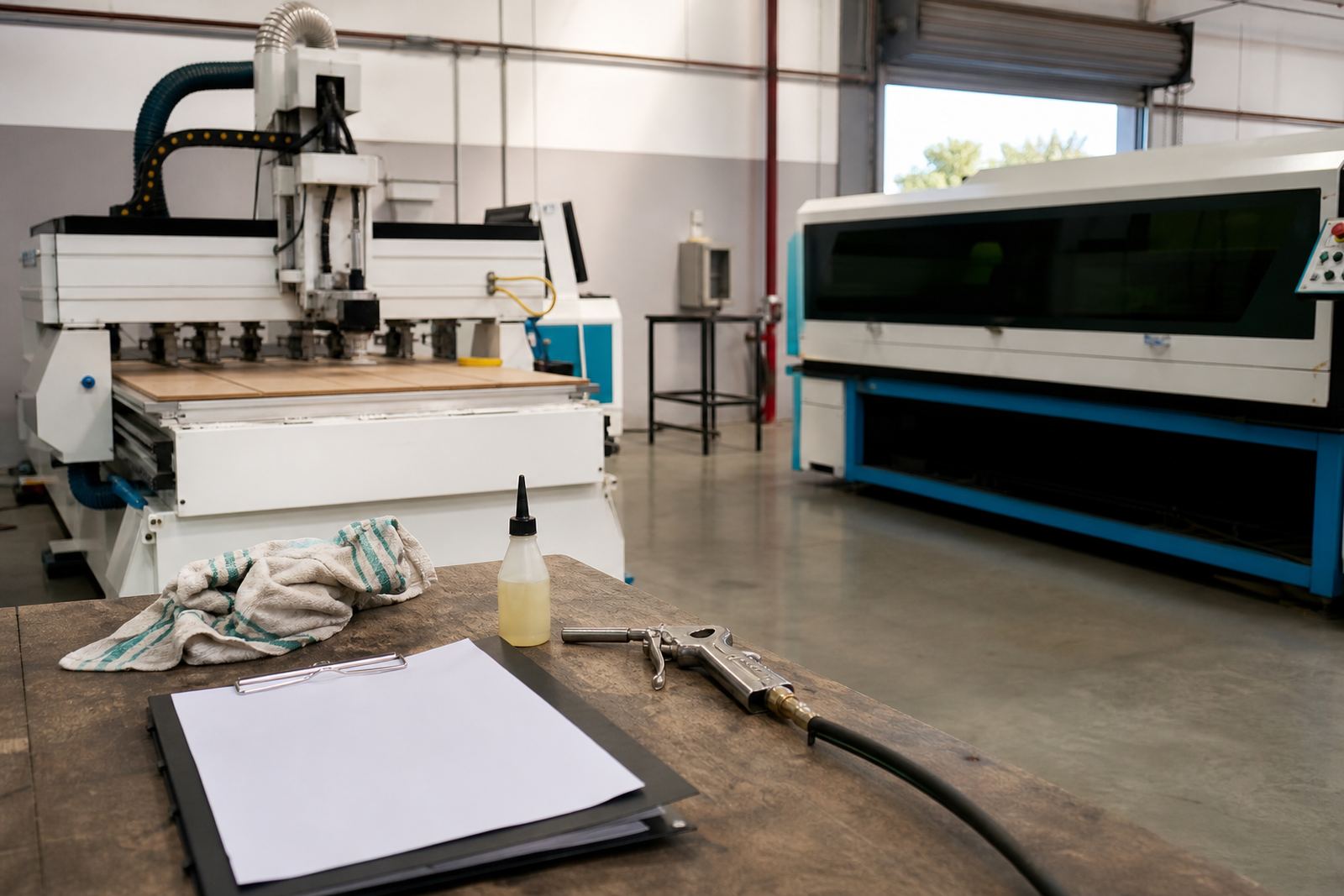
Before you switch off, walk the machine and note anything that is already not right. Look for unusual noise, loose covers, worn cables, weak suction, air leaks, dirty filters, spindle play, axis backlash, alarm history and any cut quality drift that has been building up. If a fault is present now, record it clearly, because January is not the time to try and remember what was happening in November.
Clean the machine, not just the floor
Dust, swarf, abrasive residue and old lubricant do more harm when a machine stands idle for weeks. Clean rails, guides, covers, sensors, beds, vacuum tables, filters, enclosures and cable runs, then remove waste that can hold moisture or attract pests. On lasers, plasma cutters and printers, pay special attention to optics, extraction paths and anything that can clog, corrode or dry out.
Record consumables and wear items
Make a list of parts that are already near the end of their life. That should include bearings, belts, hoses, couplings, seals, nozzles, lenses, breakers, relays, limit switches, pumps, fans, filters, lubricators and any consumables linked to the process. If you note what is installed now, you will know what to order before production starts again, instead of finding out after the first failed job.
Back up settings and note operating status
Save controller files, machine parameters, macros, recipes, profiles and any custom settings that matter to setup speed and repeat work. Write down the last known good state, including tool offsets, calibration points, software versions and any alarm codes that appeared near shutdown. If we arrive for a January call-out, this record helps us get to the real issue faster.
Plan what happens on restart
Leave the machine ready for a controlled return to service. That means isolating anything that should stay off, protecting exposed parts, checking lubrication points, and making sure the first startup can be done in stages. A clear shutdown note should say what was inspected, what was repaired, what is still outstanding and what needs watching after the holiday break.
What our CNC Repair customers say
Verified Google reviews
Questions we get asked
Why is December shutdown such a risky time for CNC equipment?
Because problems often get parked instead of fixed. Dirt, moisture, battery loss, dried grease and unfinished faults can all turn into a restart failure when the workshop opens again.
What should we record if the machine is running but not perfect?
Record the symptoms, the conditions it happens under, any alarm codes, the parts already showing wear, and whether production quality is still acceptable. That helps turn a vague complaint into a proper repair plan.
Can you help with shutdown inspections and January restart support?
Yes. We support workshops with field service, fault finding, maintenance and repair planning for routers, lasers, plasma, milling machines and related CNC equipment.
Also worth a look
Tell us about the job
Send sizes, materials and where you are through our contact form, and we will come back with the practical options.
Open the contact form